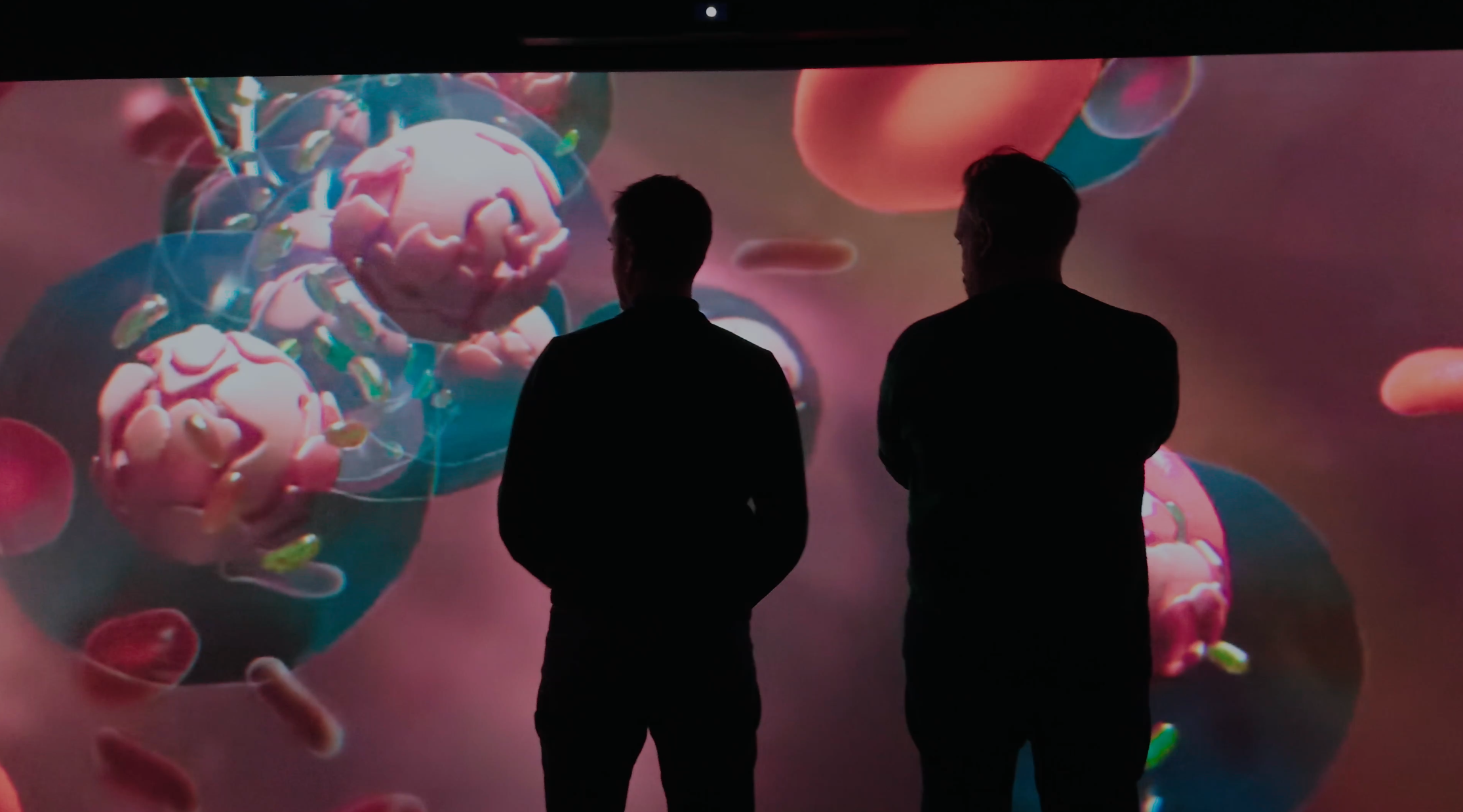
In marketing and corporate communication, there are moments when a traditional presentation isn’t enough.
Some messages need more: real attention, instant understanding, and active engagement.
That’s where immersive experiences come in.
Virtual environments, interactive installations, 3D spaces, and navigable digital worlds turn a complex message into something people can see, explore, and live.
The result completely changes how the content is perceived.
You move from information to experience.
When immersive experiences truly matter
Immersive experiences become especially effective when communication needs three essential elements:
attention
fast understanding
engagement
Many corporate projects involve technical concepts, complex processes, or innovations that are hard to explain through slides or traditional videos.
In these cases, an immersive experience helps you:
show what usually remains invisible
simplify complex ideas
create clear context for the audience
increase attention span
The audience stops being a viewer—and becomes part of the story.
Interaction as an accelerator of understanding
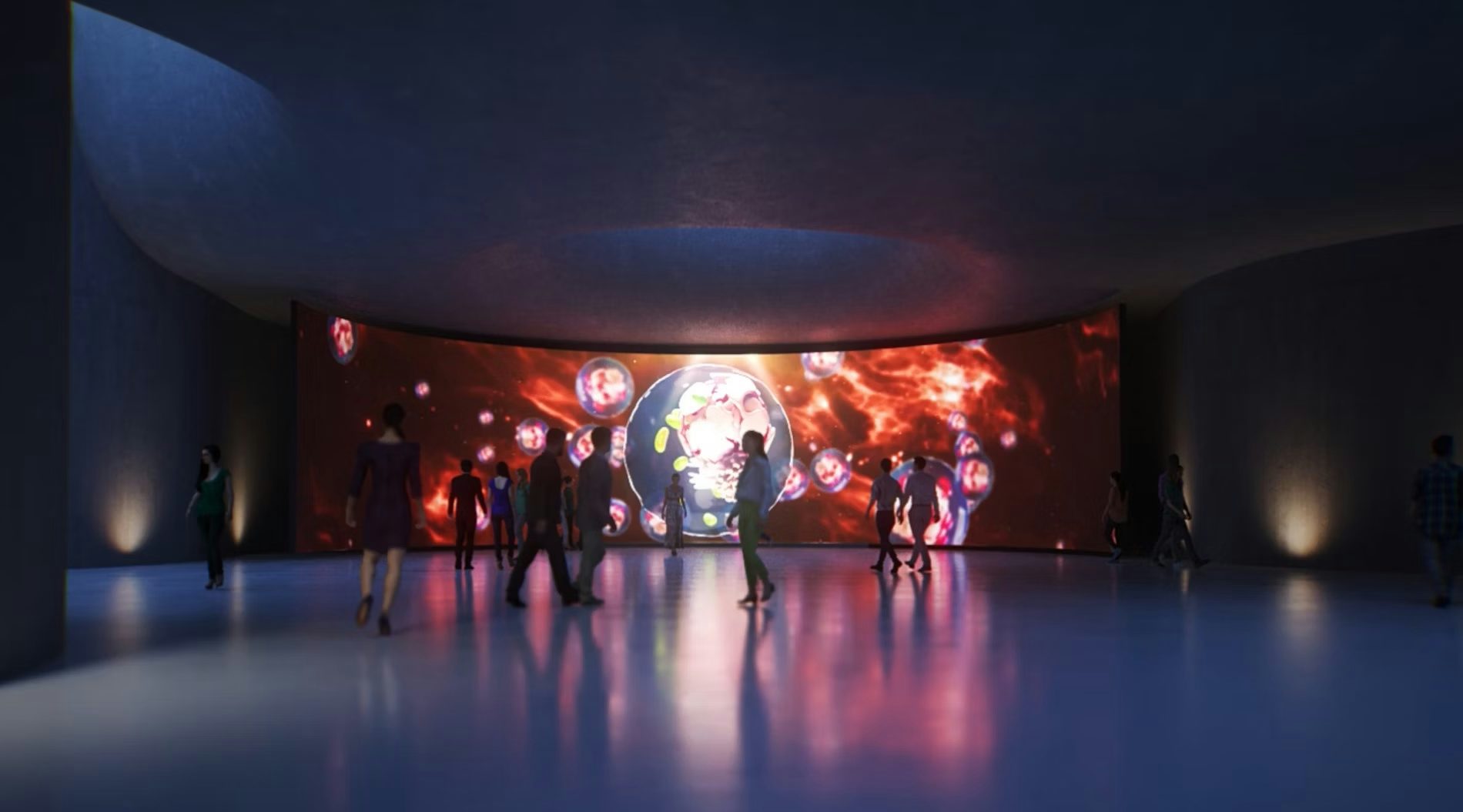
One of the main advantages of immersive experiences is interaction.
When someone can explore a visual space, the message becomes instantly clearer.
Interaction:
boosts memorability
creates context
speeds up understanding
turns a presentation into an experience
The brain processes what it can see and live far faster than a purely verbal explanation.
Beyond slides: communicating more effectively
Many companies still rely on traditional presentations to explain complex projects.
Slides, charts, and diagrams have a natural limit: they require interpretation.
Immersive experiences, instead, make it possible to show directly how a system, product, or process works.
This approach is especially effective in contexts such as:
international trade shows
corporate events
stakeholder presentations
new technology launches
corporate training
storytelling for complex projects
The experience becomes the language of communication.
From information to experience
The real shift introduced by immersive experiences is how people receive a message.
Traditional information:
listening
interpretation
limited retention
Immersive experience:
exploration
immediate understanding
stronger recall
When content becomes an experience, the audience understands it faster and remembers it longer.
The role of immersive technologies today
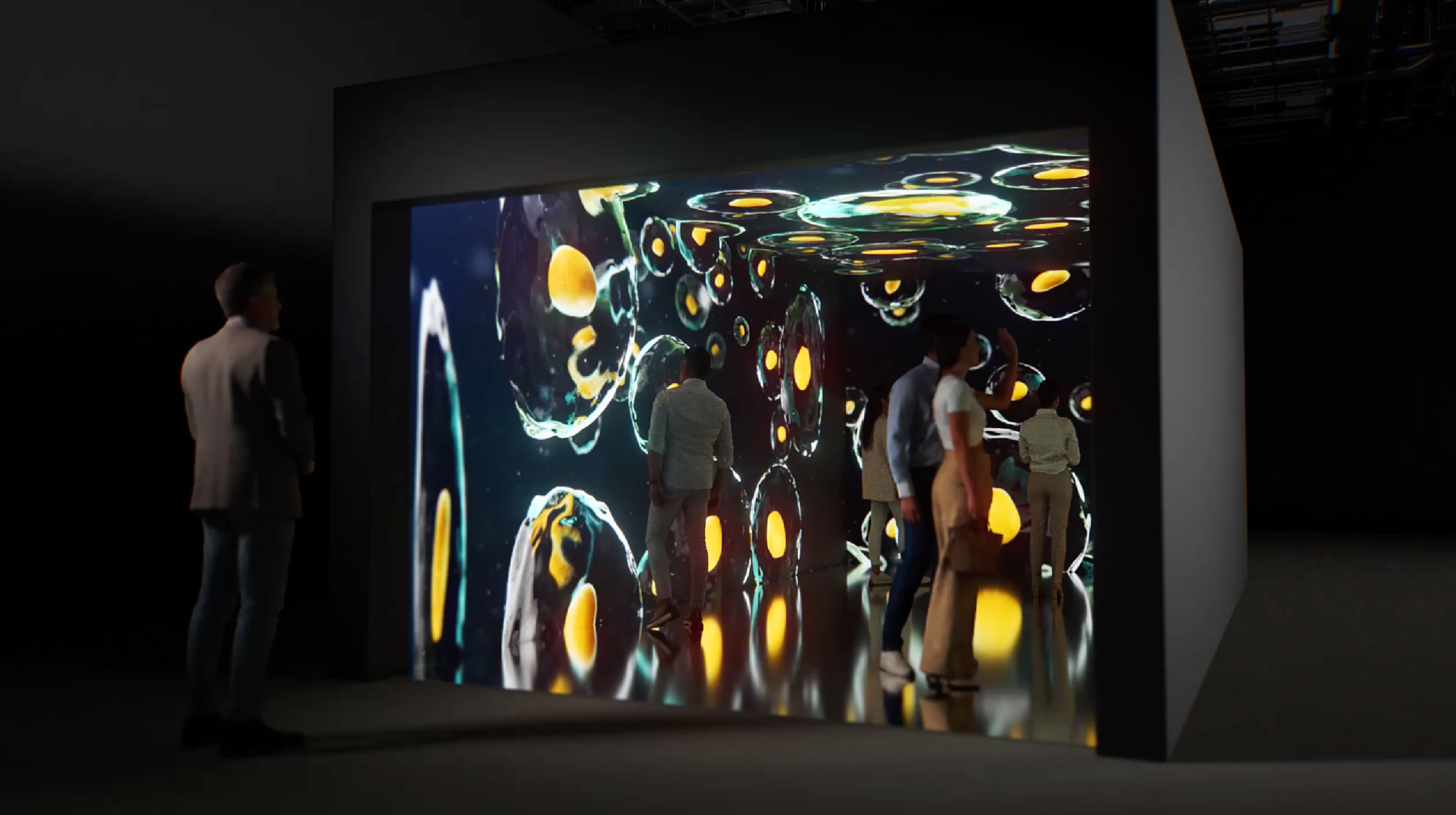
Thanks to today’s tools—3D, virtual reality, interactive environments, generative AI, and real-time rendering—building immersive experiences has become far more accessible than it used to be.
This enables companies to:
tell innovation clearly
make complex processes visible
engage audiences in a memorable way
stand out during events and presentations
Immersive experiences become a strategic communication tool, especially for companies that need to explain technology, research, infrastructure, or advanced processes.
In summary
Immersive experiences work best when you need:
attention
fast understanding
real engagement
In those moments when a slide can explain—but an experience makes people truly get it.
Because the most effective communication today doesn’t just tell something.
It makes people live it.