In healthcare, omnichannel often sounds like a shared “yes, of course”… and then gets stuck halfway. Strategy gets discussed, touchpoints get mapped, channels get listed. But real progress happens when the system becomes operational: clear, consistent, validated content—designed from the start to live across multiple contexts.
That’s the need behind “Unlocking Omnihealth”, the contribution brought by Una Hub Health to Intersections: a workshop built to focus on what truly changes outcomes—the clinicians’ voice, and the quality of content that supports them (together with patients) throughout the information journey.
The starting point: clearer, more consistent, better-crafted content
During the workshop, a very current tension emerged:
Clinicians and patients are asking for content that is easier to understand, consistent over time, and backed by a stronger visual and informational standard.
Companies are looking for a practical way to turn omnichannel into a real program: governance, priorities, and assets that genuinely work across touchpoints without losing quality.
Our direction was precise: treat omnihealth as an ecosystem, not as a list of channels.
Three levers to turn omnichannel into a system that works
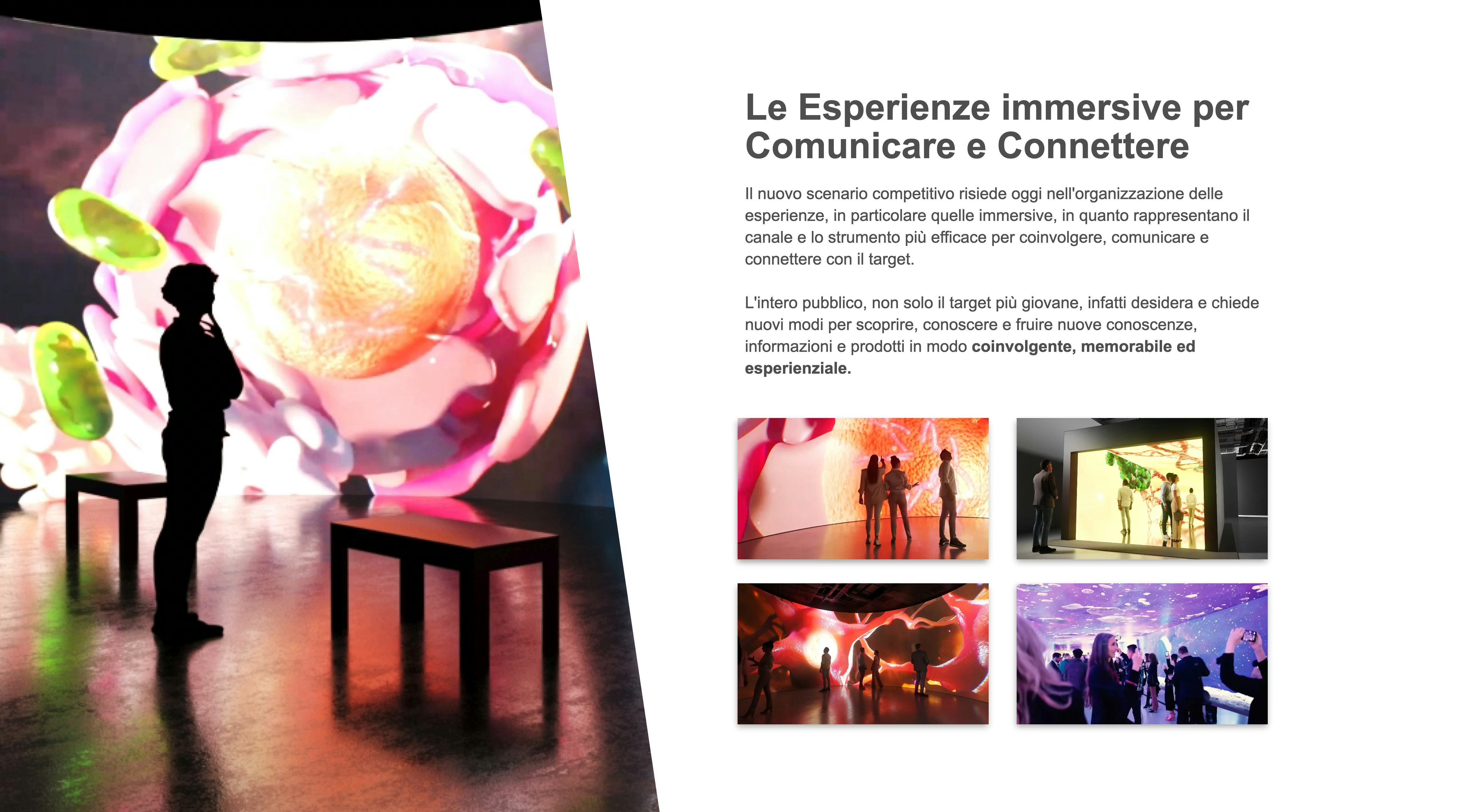
1) Immersive experiences: when you need attention, understanding, engagement
Immersive experiences are especially effective when the goal is to make complex concepts immediately graspable. They don’t replace communication—they amplify it.
In these contexts, interaction becomes an accelerator:
increases memorability,
creates context,
makes it easier to “get it fast,”
takes content beyond the slide deck.
In other words: from information to experience.
2) AI in healthcare communication: valuable only with process and control
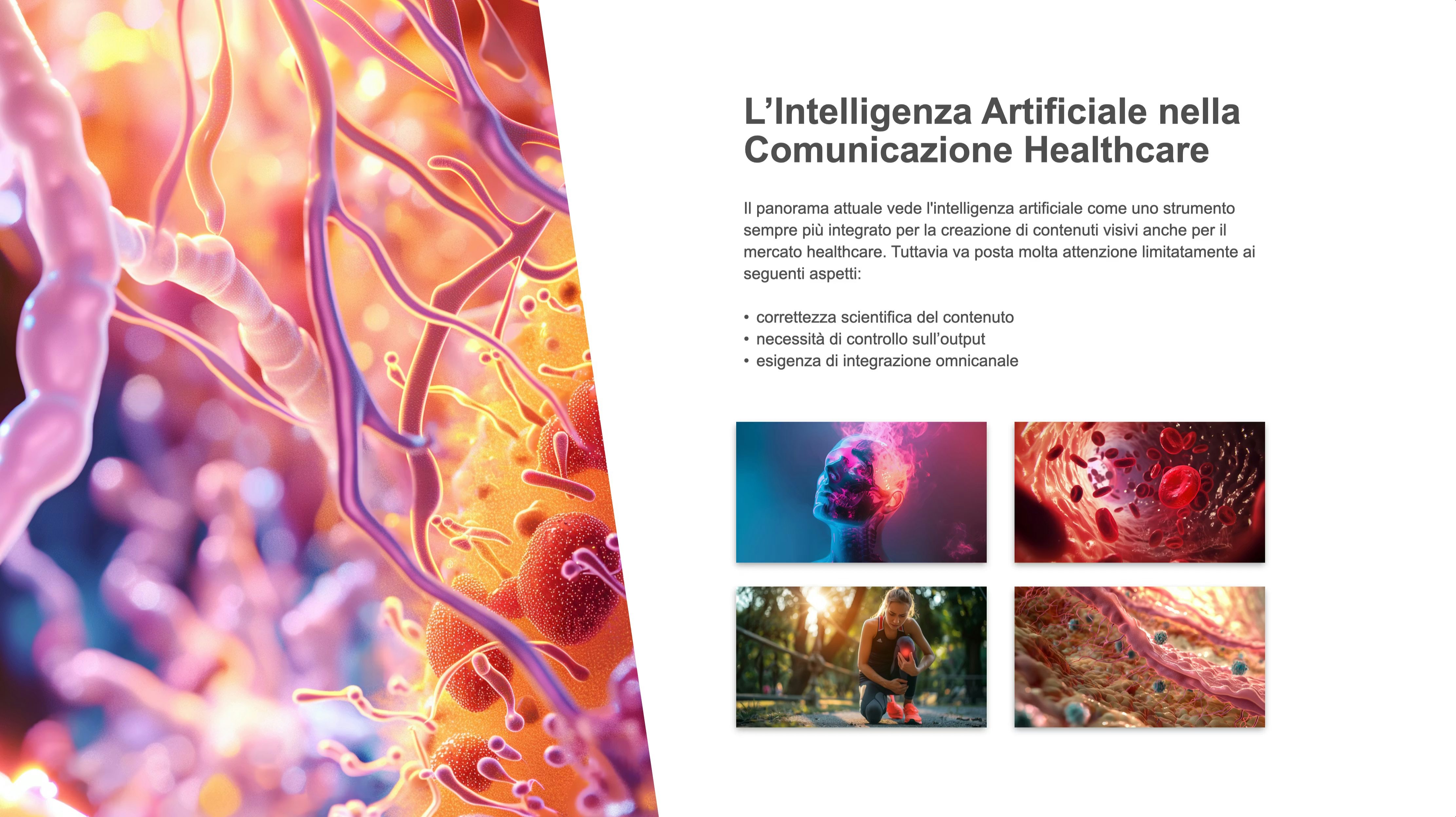
AI is increasingly part of content production workflows—even in medical communication. The real question isn’t whether to use it. The real question is how to govern it.
To create value, you need:
scientific accuracy,
output control,
cross-channel consistency,
shared standards and validation.
When AI is integrated into a rigorous process, it becomes a true multiplier of efficiency and quality.
3) Digital assets: omnichannel becomes real in the asset library
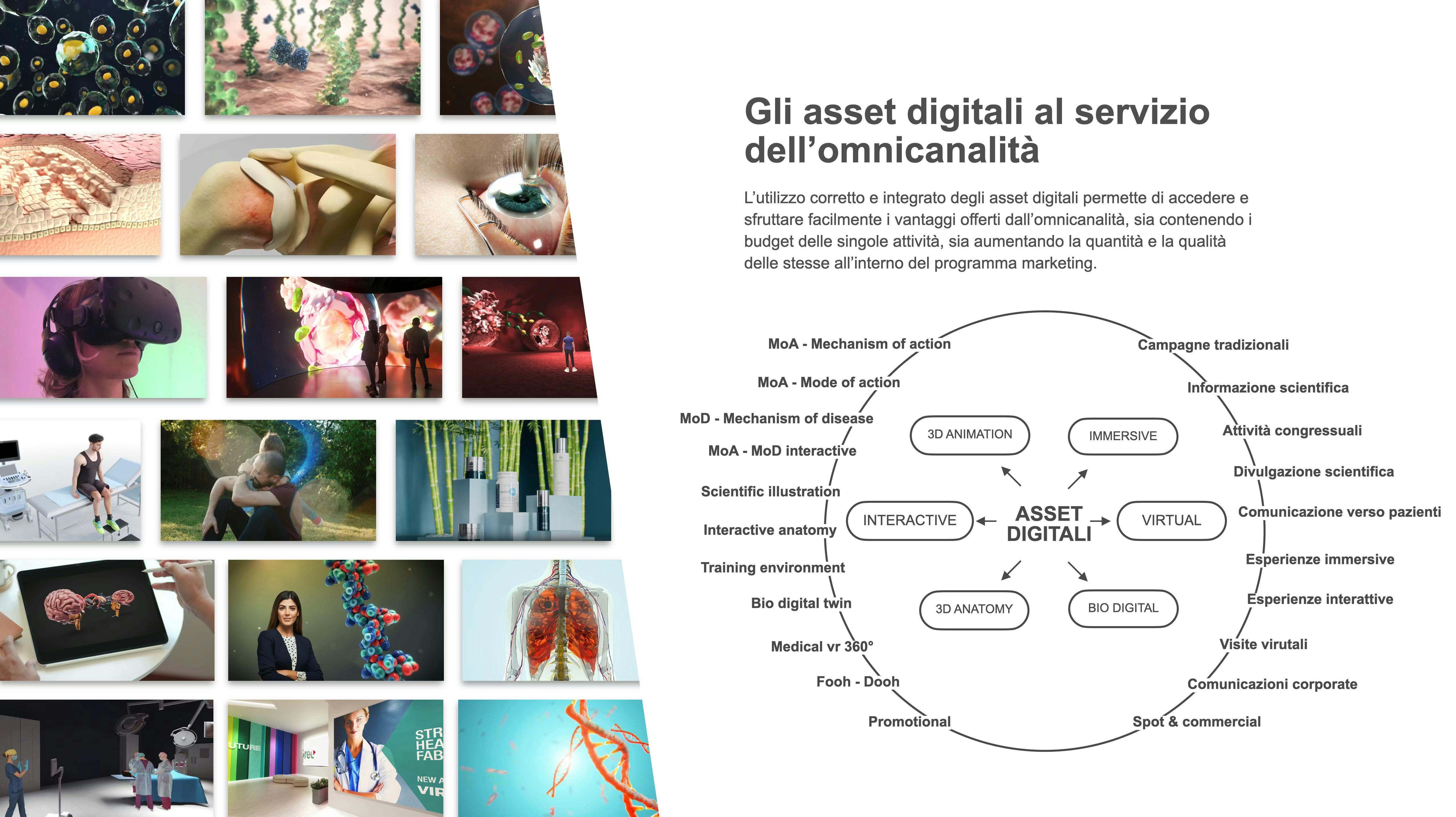
Omnichannel becomes tangible when there’s a modular, interoperable foundation of content: 3D animations, interactive tools, immersive and virtual experiences, bio-digital assets.
Assets designed this way:
are produced once at a high standard,
can be adapted into multiple formats,
enable smoother distribution across scientific, congress, patient communication, and corporate needs,
optimize time and budgets without starting from scratch.
The asset becomes a strategic building block: reusable, consistent, scalable.
A key event asset: the logo animation
To give the workshop a clear identity and rhythm, we created a logo animation used both to open the session and to promote it beforehand.
A short piece of content with strong impact, designed to:
set the tone,
build recognition,
ensure visual coherence across the experience.
Closing focus: interview with Alessandro De Toffol (Marketing Manager)
To wrap up, we asked three practical questions: how omnichannel is implemented in real life, where immersive experiences sit within the mix, and how AI fits into healthcare marketing programs today.
1. Omnichannel: solutions and operating models
2. Experience Economy: where immersive experiences belong
3. AI and omnichannel: how it integrates into marketing programs
When Omnihealth becomes real
Omnihealth works when you build an ecosystem:
assets designed to work together, experiences that increase understanding and engagement, and AI embedded into a controlled, rigorous process.
That’s when omnichannel stops being a concept and becomes tangible value for clinicians, patients, and marketing teams.